How Adaptive Mountain Biking Supports Recreation and Community for Veterans
A disabled veteran mountain biking camp brings together trained instructors, adaptive equipment, and peer support in a welcoming outdoor environment. These programs help veterans stay active, build confidence, develop new skills, and connect with others through meaningful outdoor recreation experiences.
Participants may face a variety of challenges, including adjusting to new routines, maintaining community connections, and finding meaningful opportunities for recreation and engagement. Adaptive mountain biking programs have emerged as one meaningful way to address these challenges, putting veterans back on trails, back in teams, and back in motion.
This article explores what these programs actually look like, why they work, and what veterans and families should know before seeking one out.
What Is Adaptive Mountain Biking for Disabled Veterans?
Adaptive mountain biking refers to riding programs that modify equipment, technique, or trail access to accommodate veterans with physical, cognitive, or emotional disabilities. This includes hand-cycles, recumbent bikes, e-assist bikes, and seated trail rigs, along with trained coaches who understand veteran-specific needs.
Unlike standard cycling programs, a veteran's mountain biking camp typically integrates:
Peer mentorship from other veterans who ride
Professional guidance from adaptive sports coaches
Gradual progression from flat terrain to technical trails
A structured group environment that mirrors the team culture of military service
The goal isn't just fitness. It's reintegration, physically, socially, and emotionally.
Why Adaptive Mountain Biking Can Be Meaningful for Veterans
The Physical Benefits Are Measurable
Mountain biking engages the full body. Core stability, upper and lower body coordination, cardiovascular endurance, and balance are all activated, often without the joint impact of running or other high-impact activities. For veterans managing orthopedic injuries, prosthetics, or chronic pain, adaptive equipment makes participation possible without sacrificing challenge.
Regular participation in outdoor recreation therapy programs has been associated with improved sleep, reduced chronic pain perception, and greater physical independence.
The Mental Health Impact Goes Deeper
Time outdoors on trails has a documented effect on stress reduction. The combination of physical exertion, natural surroundings, and focused attention required by trail riding creates what researchers call an "attentional restoration" effect; the brain gets a break from rumination.
For veterans dealing with PTSD, anxiety, or depression, a veteran's mountain biking camp offers something that structured clinical settings can't always replicate: genuine engagement in a challenging, goal-oriented activity with peers who understand their background.
Building Connection Through Shared Experiences
One of the most consistent findings in veteran wellness research is that peer connection matters. Veterans often find it difficult to connect with civilian communities after service; the shared reference points just aren't there. Mountain biking camps solve this by putting veterans alongside other veterans, working toward a common physical goal.
Participating in outdoor recreation alongside fellow veterans often creates opportunities for encouragement, teamwork, and meaningful connection.
Who Can Participate in a Veteran's Mountain Biking Camp?
Most programs are open to veterans of all ability levels, including those with:
Limb loss or limb difference
Spinal cord injuries
Traumatic brain injuries (TBI)
Visual impairments (tandem options available)
Physical, cognitive, and other disabilities
The entry bar is intentionally low. Participants don't need prior cycling experience. Camps typically begin with equipment orientation, basic skills instruction, and short trail segments, progressing as confidence and capability grow.
What to Expect at a Veteran's Mountain Biking Camp
Most multi-day camps follow a similar structure:
Day 1. Orientation and Equipment Fitting: Veterans work with coaches to select appropriate adaptive equipment and complete basic safety training. This is also where riders begin building relationships with instructors and fellow participants.
Day 2–3. Skills Progression on Managed Trails: Guided sessions cover braking, cornering, descending, and climbing, with routes chosen based on each participant's ability. Group rides create natural opportunities for conversation and connection.
Day 4+. Trail Exploration and Group Challenges: More advanced participants take on longer or more technical routes. Peer mentors often ride alongside newer participants, reinforcing the community model.
Evening programming may include group meals, skills discussions, or guest speakers from veteran wellness organizations.
How These Programs Differ from Standard Adaptive Sports
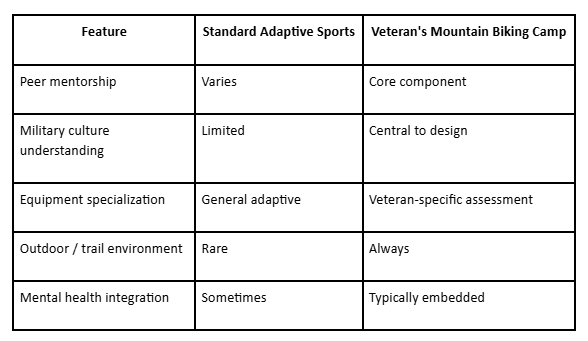
The veteran-specific design makes a meaningful difference. Programs built for this population understand rank dynamics, communication styles, and the particular stigma that can come with asking for support.
Adaptive Veteran Programs at STARS
STARS offers adaptive recreation opportunities for veterans and active-duty service members with service-connected disabilities. Programs may include adaptive mountain biking, rafting, fly fishing, retreats, and other outdoor experiences designed to encourage participation, skill development, and community connection. Programs are supported by trained staff, adaptive equipment, and a welcoming environment that helps participants enjoy the outdoors with confidence.
How does STARS support veterans?
STARS offers adaptive recreation programs for veterans and active-duty service members with service-connected disabilities. Programs may include mountain biking, rafting, fly fishing, retreats, and other outdoor recreation experiences designed to support participation and community connection.
Conclusion
Adaptive mountain biking programs provide veterans with opportunities to stay active, build new skills, and connect with others through outdoor recreation. By combining adaptive equipment with veteran-centered programming, these camps address the physical, mental, and social dimensions of life after service in a way that few other programs can.
For veterans looking to reconnect with their own capabilities and with others who understand their experience, the trail is a place worth starting.
Frequently Asked Questions
1. What equipment is provided at a veteran's mountain biking camp?
Most programs provide adaptive bikes, helmets, and protective gear. Veterans should confirm in advance what is supplied and what physical requirements exist for each equipment type.
2. Do I need riding experience to attend?
No prior experience is needed. Camps are structured to welcome beginners while still offering challenges for experienced riders.
3. Are these programs available for veterans with PTSD or mental health conditions?
Yes. Many veterans' mountain biking camps are specifically designed with mental health support in mind, including trained staff and peer mentors.
4. How long do these programs typically run?
Program length varies from single-day clinics to week-long residential camps. Multi-day formats tend to show stronger outcomes for community building.
5. Is there a cost to attend?
Costs vary by organization and program. Some adaptive recreation programs may offer scholarships, grant funding, or other financial assistance opportunities.
6. Can family members participate or visit?
This depends on the specific camp. Some programs include family programming; others are veteran-only to preserve the peer dynamic.