Planning an Adaptive Ski Trip to Colorado: An Early-Bird Guide for Families
Planning an adaptive ski trip to Colorado takes more than choosing a mountain and booking a room. For families traveling with a child or adult with a physical or cognitive disability, choosing the right winter recreation program, equipment, instruction, lodging, and daily logistics can make trip planning easier.
Starting early gives families more time to understand their options and choose an adaptive ski program in Colorado that matches the participant's abilities, interests, and goals.
Why Start Planning an Adaptive Ski Trip Early?
Winter travel to the Colorado mountains involves more moving parts than a typical ski vacation. Families may need to consider the participant's previous experience, mobility, communication needs, equipment, instruction, transportation, and the amount of support needed during an activity.
Before booking, consider:
What winter activity does the participant want to try?
Have they skied, snowboarded, or participated in another winter sport before?
Would they benefit from instruction or a guide?
What type of adaptive equipment may be appropriate?
Are there registration or participation requirements?
Will the family need financial assistance?
What accommodations and transportation arrangements will make the trip easier?
Thinking through these questions early can help families avoid making travel arrangements before they understand the recreation program.
Which Winter Activity Is the Best Fit?
Adaptive winter recreation isn't limited to traditional downhill skiing. Depending on the participant and program, families may explore several options.
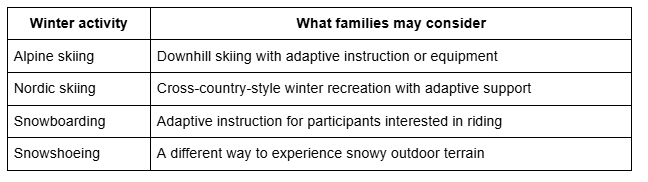
The best choice depends on the individual's interests, experience, abilities, and goals rather than simply choosing the most familiar activity.
For a first-time participant, it can also help to think beyond skill level. Comfort with new environments, communication preferences, endurance, and the type of assistance required can all be useful information when discussing program options.
Instruction or a Guide: What Does the Participant Need?
One of the most important decisions in accessible ski trip planning is understanding the difference between instruction and guiding.
A participant who is learning to ski or snowboard, developing new skills, or benefiting from individualized support may be better suited to a private adaptive lesson. A more experienced skier or rider who can participate independently but would benefit from someone familiar with the mountain may have different needs.
STARS offers private adaptive lessons as well as an Adaptive Guide Program.
The guide program is intended for independent skiers or riders who do not need instruction or assistance with skiing or riding but want a guide to show them around the mountain and be available in case of an emergency.
Advance booking is required for this program.
Understanding that distinction before arriving can help families choose support based on the participant's experience rather than assuming every adaptive program works the same way.
What About Adaptive Equipment?
Equipment is another reason to plan.
Specialized adaptive equipment can vary according to the activity and participant. STARS states that adaptive equipment is supplied for its winter programs, while its winter resources provide additional information about participant rentals, sit-ski equipment, helmets, and lift tickets.
Families should still review the current winter resources to confirm what equipment is provided through the program and what needs to be arranged before the lesson.
A simple conversation with the program before the trip can help clarify what is provided and what the family needs to arrange separately.
A Simple Early-Bird Planning Checklist
Rather than waiting until the winter season is underway, families can work through the following steps:
1. Choose the activity.
Decide whether the participant is most interested in alpine skiing, Nordic skiing, snowboarding, or snowshoeing.
2. Think about the participant.
Consider previous experience, mobility, endurance, communication preferences, and personal goals.
3. Determine the type of support.
Decide whether individualized instruction, another form of assistance, or a guide is more appropriate.
4. Review program requirements.
Check registration information, participant resources, policies, equipment details, and scheduling before finalizing plans.
5. Plan the rest of the trip around the activity.
Consider lodging, transportation, meal schedules, winter weather, and how much downtime the participant may need.
6. Look into financial assistance.
If cost is a concern, check whether financial assistance is available. STARS offers need-based scholarships for qualifying participants.
Think Beyond the Ski Lesson
An adaptive ski trip is also a family vacation.
The experience around the lesson matters. Families may also want to consider places to rest, eat, explore, or spend time together when they are not on the mountain, while checking accessibility details in advance.
The broader Yampa Valley and Routt County area also gives families options for time away from the ski program. Depending on the participant's interests and accessibility needs, families can also research local parks, trails, and other outdoor experiences in Northwest Colorado, checking individual sites for current accessibility information.
For families returning in another season, adaptive hiking or mountain biking around the area may provide additional ways to experience the landscape. These activities don't need to be part of the winter itinerary; simply knowing that the destination offers different outdoor experiences can make trip planning feel more flexible.
Make the Participant the Starting Point
The strongest adaptive recreation plans begin with the individual, not the activity.
A child who is new to skiing may need a very different experience from an experienced adaptive athlete. Likewise, two participants with similar mobility needs may have completely different goals, preferences, or comfort levels.
That's why early communication matters. Instead of asking only, "Which lesson should we book?" families can ask, "What type of support would best fit this participant?"
For families researching adaptive ski lessons in Steamboat, STARS is a useful starting point for understanding winter programs, support options, equipment, and participant resources.
Plan Early, But Plan Around the Person
An adaptive ski vacation doesn't have to be complicated, but it does benefit from thoughtful preparation. Reviewing activities, support options, equipment, registration requirements, travel logistics, and financial assistance before the trip can give families greater confidence when the winter season arrives.
From the slopes and surrounding trails to the wider Yampa Valley and Northwest Colorado landscape, the goal is not simply to fit a participant into a winter activity. It is to create an experience that fits the participant.
That is where early planning can make a difference: start with the person's interests and needs, then build the trip around them.
Frequently Asked Questions
What should families ask an adaptive ski program before booking?
Families can ask about available activities, participant requirements, instructor or guide support, adaptive equipment, scheduling, and any information needed before participation. Asking these questions early can help families choose a program that fits the participant's needs and experience.
Can a first-time skier participate in adaptive skiing?
Yes. Adaptive ski programs can accommodate participants with different levels of experience, including those who are new to skiing. Families can share the participant's experience level, abilities, communication preferences, and support needs with the program when planning.
What should families plan for beyond the ski lesson?
Families should also consider lodging, transportation, meals, rest periods, winter weather, and activities for time away from the mountain. Because accessibility needs vary from person to person, checking accommodations and destinations in advance can help families plan more comfortably.
Does STARS offer financial assistance for adaptive programs?
Yes. STARS offers need-based scholarships for qualifying participants. Families interested in financial assistance should review the current scholarship requirements, application process, and deadlines before planning their trip.