
Autumn in Steamboat: A Guide to Accessible Fall Foliage and Trails
Direct Answer
Accessible trails in Steamboat Springs offer several ways to enjoy the area's fall scenery, from paved river corridors and park paths to accessible sections of more scenic routes. The Yampa River Core Trail, Fish Creek Falls Overlook Trail, Yampa River Botanic Park, and lower Spring Creek Trail each have different surfaces, terrain, and accessibility considerations.
When planning fall activities for people with disabilities, the right route depends on factors such as surface, terrain, distance, equipment, and the participant's individual needs.
Autumn Outdoors in the Yampa Valley
Autumn brings a different character to Northwest Colorado. As temperatures cool and foliage begins to change across the Yampa Valley, outdoor recreation can become an appealing way to experience the landscape.
For seniors, adaptive hikers, families, and visitors with limited mobility, however, enjoying the fall scenery starts with choosing an appropriate route. A trail that looks manageable on a map may have changes in surface, grade, or terrain that affect how suitable it is for different mobility devices and abilities.
Routt County offers a variety of outdoor settings, from river corridors and community parks to mountain landscapes. The key is finding an experience that matches the individual rather than simply choosing the most scenic or popular trail.
What Makes a Trail a Better Fit for Limited Mobility?
Accessibility is not simply a label attached to an entire trail. A route may include an accessible section while becoming steeper, narrower, or more technical farther along.
Before choosing a trail, consider:
Surface: Paved or stable surfaces may be easier for some wheelchairs and other mobility devices.
Terrain: Flat or lower-grade sections can be more manageable than steep or rocky areas.
Width: Wider routes may provide greater space for mobility equipment and companions.
Distance: A shorter accessible section may be preferable to completing an entire route.
Changing Conditions: Rain, fallen leaves, moisture, or other seasonal changes can affect the surface.
These details are particularly important when planning an autumn outing because conditions can change throughout the season.
Accessible Trails and Outdoor Areas to Consider
Yampa River Core Trail
The Yampa River Core Trail is a practical option for visitors looking for a relatively level outdoor experience. It is mostly paved and follows the Yampa River through the community, connecting with areas including the Yampa River Botanic Park and Howelsen Hill.
For fall foliage viewing, the river corridor offers an opportunity to enjoy the changing seasonal landscape along a mostly paved, relatively flat route. Its connections with other community areas also allow visitors to shape an outing around their available time and energy.
Fish Creek Falls Overlook Trail
For a shorter scenic experience, the Fish Creek Falls Overlook Trail includes a paved accessible section leading to an overlook.
An important planning point is that the accessible portion does not represent the entire route. Beyond the overlook section, the terrain becomes rockier and more technical. Visitors should therefore identify the appropriate stopping point before beginning their outing.
Yampa River Botanic Park
The Yampa River Botanic Park provides another option for enjoying the outdoors at a more relaxed pace. Recommended routes include the Loop Walk, Trail Entrance Walk, and North Perimeter Trail.
The park can also be reached from the Yampa River Core Trail, giving visitors the option to combine the two areas depending on their mobility and available energy.
Lower Spring Creek Trail
The lower portion of Spring Creek Trail is described as a wide, relatively flat dirt road extending toward Spring Creek Park and the reservoir.
Further along, the route becomes steeper and rockier. For visitors with limited mobility, focusing on the lower section rather than assuming the entire trail has the same characteristics can make planning more realistic.
Planning an Accessible Fall Outing
A little preparation can make an autumn excursion more comfortable.
Start with the individual. Consider mobility, endurance, equipment, assistance needs, and how long the participant wants to spend outdoors.
Choose the surface carefully. Paved and stable surfaces may work better for some mobility devices than loose dirt, rocks, or uneven ground.
Confirm the accessible section. Check where an accessible portion begins and ends rather than assuming an entire trail offers the same conditions.
Check conditions before leaving. Autumn weather can change quickly in the mountains, and moisture or fallen leaves may affect surfaces.
Plan around energy levels. A shorter outing with time to enjoy the scenery may be more rewarding than attempting a longer route.
For visitors interested in adaptive hiking or cycling, local adaptive recreation resources can also help identify activities and equipment suited to different ability levels.
Choosing the Right Autumn Experience
There is no single “best” trail for every visitor. The right choice depends on the experience someone wants and how the route fits their individual needs.
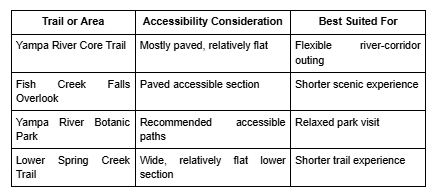
The differences matter because accessibility is personal. A route that works well for one wheelchair user, senior traveler, or adaptive athlete may not be appropriate for another.
Making Fall Recreation More Inclusive
Accessible outdoor recreation is about more than reaching a viewpoint. It creates opportunities for people with different abilities to participate in experiences that might otherwise feel difficult to access.
For families and caregivers, an accessible trail can provide shared time outdoors while allowing the participant to remain actively involved. For adaptive hikers and other outdoor enthusiasts, it can provide another way to experience the seasonal landscape of the Yampa Valley.
Local adaptive recreation programs can be another resource for people who want to explore hiking, cycling, or other outdoor activities with specialized support and equipment.
For visitors who want additional support exploring adaptive outdoor recreation, STARS offers hiking and cycling programs for participants with disabilities, along with specialized adaptive equipment.
Conclusion
Autumn exploration in the Yampa Valley does not have to mean choosing the most challenging trail. With the right route, current conditions, and a realistic understanding of individual mobility needs, visitors can enjoy fall scenery at a pace that works for them.
From the Yampa River corridor and botanic gardens to the accessible section of Fish Creek Falls and lower Spring Creek, Northwest Colorado offers several ways to experience the changing landscape while keeping individual needs at the center of the plan.
Frequently Asked Questions
When is the best time to see fall foliage in Steamboat?
Fall color timing can vary from year to year depending on elevation, weather, and seasonal conditions. Visitors planning an autumn outing should check current local foliage and trail conditions when choosing their travel dates.
Is the entire Fish Creek Falls Overlook Trail accessible?
No. The accessible portion is the paved overlook section. The route becomes rockier and more technical beyond that area, so visitors should plan around the section that matches their mobility and equipment.
Can seniors with limited mobility enjoy fall trails in the Yampa Valley?
Yes. Several local outdoor areas include paved, relatively flat, or otherwise more manageable sections. The most suitable choice depends on individual mobility, endurance, equipment, and current trail conditions.
What should I consider before choosing an accessible fall trail?
Consider the trail surface, grade, distance, width, accessible stopping points, weather, and current conditions. An accessible section may not extend across an entire trail, so reviewing the route in advance can help avoid unexpected terrain.