Top Benefits of Adaptive Outdoor Adventure Programs for Kids and Adults
Quick Answer:
Adaptive outdoor sports programs offer structured, equipment-supported recreation for people of all ability levels, supporting physical activity, mental resilience, and social connection for both children and adults.
Introduction
Many people assume outdoor recreation opportunities are limited for individuals with disabilities.
Whether it's a child in a sit-ski or a veteran hand-cycling mountain trails, adaptive programs don't just offer recreation. They provide opportunities for outdoor activity, skill-building, and community connection.
Key takeaways
Designed for all ability levels, from beginners to seasoned athletes
Benefits span physical, mental, social, and emotional health
Kids build confidence, while adults benefit from continued recreation and community connection.
Specialized equipment and trained instructors ensure safe participation
Scholarships and nonprofits help close cost and access gaps
Year-round programs provide recreation opportunities across multiple seasons
What Are Adaptive Sports Outdoor Adventure Programs?
These programs modify traditional outdoor activities, such as skiing, cycling, kayaking, and rock climbing, so people with physical or cognitive disabilities can participate fully.
Adaptation happens through specialized equipment (sit-skis, handcycles, outriggers), modified instruction, and thoughtful route planning.
The goal is to create opportunities for participation while supporting individual abilities and goals.
Core Physical Benefits
Adaptive recreation demands real physical effort, leading to measurable health gains.
Improved cardiovascular endurance
Stronger core and upper body from paddling or hand-cycling
Better balance, coordination, and proprioception
Reduced sedentary behavior linked to secondary health complications
For children, adaptive sports support broader motor skill development.
For adults and veterans, activity restores the physical identity that disability may affect over time.
Mental Health Support
Adaptive outdoor recreation provides opportunities for physical activity, social interaction, and time outdoors in supportive community settings.
Research consistently shows reductions in anxiety and depression through outdoor recreation.
These programs can help participants engage in activities that may have previously felt inaccessible.
Programs like STARS track outcomes, including increased self-esteem, reduced isolation, and improved self-sufficiency.
What Kids Gain Specifically
Children with disabilities are often structurally excluded from peer experiences that build social skills and confidence.
Adaptive programs fix that.
Peer connection with others who share similar experiences
Structured outdoor challenges teach problem-solving and resilience
Mentorship from instructors, many of whom have disabilities themselves
Achievement that carries over to school, home, and social settings
Family participation can help support shared outdoor experiences
One STARS parent noted their child could finally do something similar to what their siblings were doing, on the mountain, on the water, on the trail.
How Adults and Veterans Benefit Differently
Adults come to adaptive programs adjusting to changes after injury or diagnosis.
Outdoor recreation programs provide opportunities for activity and connection outside of clinical settings.
Camaraderie with peers who understand shared challenges
Opportunities to stay active and continue outdoor recreation
Progressive challenge that builds confidence over time
Pathways to mentorship, with some participants later becoming coaches or ambassadors
STARS veteran participants have described multi-day outdoor camps as powerful experiences that foster resilience, independence, and lasting connections with fellow veterans.
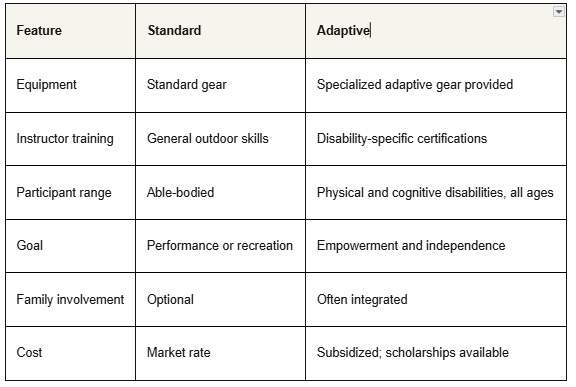
Adaptive vs. Standard Outdoor Programs
Activities Typically Offered
Winter
Alpine skiing, snowboarding, Nordic skiing, snowshoeing, sled hockey.
Summer
Hand-cycling, mountain biking, horseback riding, kayaking, water skiing, wakeboarding, archery, rock climbing, hiking.
Multi-day
Overnight camps and group retreats at accessible facilities like the STARS Ranch.
The variety ensures participants find activities that match their interests, not a one-size-fits-all approach.
Final Thoughts
Adaptive outdoor programs don't ask participants to adapt to the outdoors. They create outdoor recreation opportunities designed around participant needs and abilities.
For kids, that means inclusion and opportunities for recreation and social connection alongside peers.
For adults and veterans, it means staying active and connected through outdoor recreation and staying connected through recreation and community involvement.
Organizations like STARS help improve access through adaptive equipment, trained staff, and community support.
If you're near Steamboat Springs, Colorado, steamboatstars.com is a helpful resource for learning more about adaptive outdoor sports programs.