Planning an accessible retreat in Colorado starts with more than choosing a scenic destination. For companies and nonprofits bringing together people with different abilities, the experience should be considered from arrival through departure, including lodging, meeting spaces, meals, activities, equipment, and individual participant needs.
For organizations visiting Northwest Colorado, STARS Ranch offers a 100% ADA-compliant 24-bed facility with 9 rooms, group gathering spaces, and access to adaptive recreation programs. The key is finding a retreat environment where accessibility can be considered as part of the overall experience rather than treated as an afterthought.
What Should Organizations Look for in an Accessible Retreat Venue?
The right venue should match the practical needs of the group, not simply carry a general accessibility designation.
Before booking, organizations should ask specific questions about sleeping arrangements, entrances, bathrooms, common areas, meeting spaces, food preparation, outdoor areas, and access between different parts of the property.
Important considerations include:
Accessible lodging and sleeping arrangements
Group gathering and meeting spaces
Accessible bathrooms and common areas
Kitchen and meal facilities
Outdoor gathering areas
Access to planned activities
Equipment or participant-specific requirements
STARS Ranch is a 100% ADA-compliant, 24-bed facility with nine rooms. The property also features a Great Room, Meeting Room, full kitchen, BBQ area, and outdoor fire pit.
The property also provides a setting for applicable adaptive recreation and custom group programs.
How Can Accessible Lodging Make Group Planning Easier?
Lodging can become one of the most important logistical considerations when bringing a larger group together.
For organizations searching for accessible lodging for large groups, capacity is only part of the decision. Consider how participants will move between sleeping areas, meals, meetings, recreation, and other scheduled activities.
Keeping key parts of a retreat experience in one location may simplify transportation and reduce coordination between separate properties.
Before confirming accommodations, planners should review:
Number of participants
Sleeping arrangements
Accessibility requirements
Meeting and gathering needs
Meal arrangements
Transportation between activities
Equipment or assistance requirements
It is also helpful to discuss individual needs before arrival rather than trying to solve accessibility questions after the retreat has started.
How Can Companies Plan a More Inclusive Retreat?
An inclusive corporate retreat should give participants meaningful opportunities to take part, rather than simply placing everyone in the same location.
For HR managers and retreat planners, accessibility can affect everything from the meeting room layout to the choice of outdoor activity. A program that works well for one participant may require modifications for another.
Before finalizing an itinerary, consider questions such as:
Can everyone access the spaces they will need?
Is the planned activity appropriate for the participants?
Could adaptive equipment be required?
What individual considerations should be communicated in advance?
Does the schedule allow enough flexibility between activities?
Planning these details early allows accessibility to become part of the retreat design rather than an additional task at the end.
How Can Nonprofits Create a Meaningful Group Experience?
Nonprofits may organize retreats for children, adults, veterans, families, or groups with different physical and cognitive abilities. Their priorities can also differ depending on the gathering's purpose.
An outdoor experience may be an opportunity to build connection, develop new skills, or simply spend time together in a different environment.
For groups visiting the Yampa Valley, adaptive recreation may include activities such as adaptive hiking, adaptive cycling and mountain biking, along with customized group experiences designed around participant needs and interests.
Organizations should discuss participant abilities, interests, activity expectations, and support requirements with the program provider before making plans. This helps determine which activities and modifications may be appropriate for the group.
What Outdoor Experiences Can Be Part of a Retreat?
A Colorado retreat does not have to revolve entirely around presentations and conference rooms.
Depending on participant needs and the selected program, outdoor recreation can become part of the shared experience. Local trails, parks, the mountain environment, and the Yampa Valley provide a distinctive setting for organizations looking to incorporate time outdoors.
Adaptive hiking and adaptive mountain biking can offer structured outdoor experiences for participants, with specific activities depending on program availability and individual needs.
The important consideration is not simply whether an activity is available, but whether it can work for the people attending. Activity suitability, equipment, terrain, assistance, and individual requirements should be discussed before adding an outdoor experience to the itinerary.
What Accessibility Details Should Organizations Confirm?
A short planning conversation with the venue or program provider can help identify practical requirements before the retreat begins.
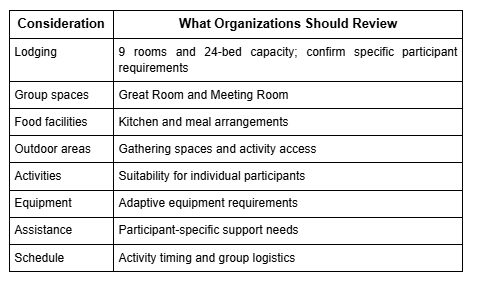
For larger organizations, it can also be useful to designate one person to coordinate accessibility requirements and communicate them to the venue and activity providers.
Why Does Local Experience Matter?
Choosing a retreat location involves understanding more than the property itself. Local knowledge can help organizations think about the broader experience, including outdoor activities, terrain, transportation, and the practical realities of participating in recreation in a mountain environment.
STARS has provided adaptive recreation opportunities since 2007 and operates as a 501(c)(3) nonprofit, serving children, adults, veterans, and people with physical and cognitive disabilities. Its programs include adaptive outdoor recreation and customized group experiences in the Steamboat Springs area.
For organizations unfamiliar with Northwest Colorado, that experience can provide useful context when considering how a retreat might combine accessible lodging, group activities, and outdoor recreation.
What Makes Accessible Retreat Planning Different?
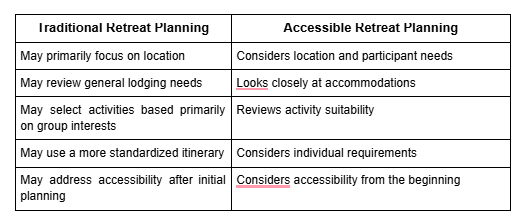
The difference is intentionality. Accessibility works best when it is considered during the planning process rather than after the itinerary, venue, and activities have already been selected.
Conclusion
Planning an accessible retreat in Colorado means looking beyond scenery and group capacity. Companies and nonprofits should consider accommodations, shared spaces, activities, equipment, and participant requirements as part of the planning process.
For organizations considering Northwest Colorado, the combination of accessible lodging, group spaces, and adaptive outdoor recreation can create opportunities for a more inclusive retreat experience.
Reach out to STARS to discuss your group's needs, preferred activities, and retreat goals, and learn more about planning a custom group experience at STARS Ranch.
Frequently Asked Questions
How far in advance should organizations plan an accessible retreat?
Organizations should begin planning early, especially when lodging, group activities, adaptive equipment, or participant-specific requirements are involved. Early planning gives providers more time to discuss suitable options.
What information should a group provide when planning an adaptive retreat?
Share the group size, preferred dates, participant needs, activity interests, lodging requirements, and any equipment or assistance considerations.
Can a retreat include participants with different abilities?
Yes, depending on the participants and activities selected. Organizations should discuss individual needs and activity requirements with the provider when planning.
Can organizations combine meetings with outdoor activities?
Yes. Depending on the facilities, program, schedule, and participant needs, a retreat can combine group meetings with adaptive outdoor recreation.
Can STARS create custom group experiences?
Yes. STARS offers custom group programs that can be planned around an organization's participants, interests, goals, and preferred outdoor activities.